
This is part ten in FCF’s mileage award comparison series, in which we grade major alliance programs by how much they charge for a free- or upgrade-award ticket from Business to First Class to/from various regions. (See box to the right for a list of recent Report Cards.)
[aside headline="Recent FCF Report Cards" alignment="alignright" width="half" headline_size="default"]
- Rating SkyTeam Business Class Award Pricing Between the U.S. and Asia
- Domestic U.S. Mileage Upgrade Awards on American, Delta, and United when Booking 7 to 30 Days in Advance
- oneworld First Class between the U.S. and Europe
- Star Alliance First Class between the U.S. and Europe
- oneworld First Class between the U.S. and Asia
- Star Alliance Business Class between the U.S. and Asia
- oneworld Business Class between the U.S. and southern South America
- Star Alliance First Class between the U.S. and Asia
- oneworld Business Class between the U.S. and Asia
[/aside]
Mileage upgrades—especially from discounted Business Class fares—are frequently the best way to get to Asia in First Class. That’s because fares on many routes are very expensive, which makes the return-on-miles worth using them.
A Note on the Grading System
It’s very simple: A through F, just like in grammar school. The lower the mileage requirement or allowing an upgrade to First on discounted published Business Class fares, the higher the grade. The grades are based on four sample routes (see chart below), as it is impossible to account for every route. FCF didn’t include many airlines, such as Air Canada, Asiana, Eva Air, and Lufthansa, for varying reasons (high Business Class fares, no First Class cabin, no upgrade to First).
Upgrade vs. Free Award Values
On Chicago-Shanghai, All Nippon charges 165,000 miles for a free First Class award and 90,000 for an upgrade, but the inventory is the same, although there’s no First Class cabin on the Tokyo-Shanghai leg. So, if you have the miles and a free ticket is available, it’s worth taking, since it saves over $6,000 in cash, unless you need the elite credit. Same holds true for Singapore Airlines. On United, however, free awards are scarcer than upgrades, so using miles for an upgrade when First Class fares are high could give you access to mileage
[aside headline="No miles? No problem." alignment="alignright" width="half" headline_size="default"]
Detailed information on getting miles here in the airline programs in this article—which includes tips on transferring points, ways to buy miles, and insights on mileage-transfer time for each program.[/aside]
The Grades
All Nippon: D+
Mileage rates vary on flight distance per flight segment, for travel beyond Tokyo miles required can be high. There are no upgrades on the lowest Business class fares (often P class); still savings over just buying a First Class ticket can at times be good. One advantage: No co-pay. Transfer partner: Amex Rewards or Starwood.
Singapore: B-
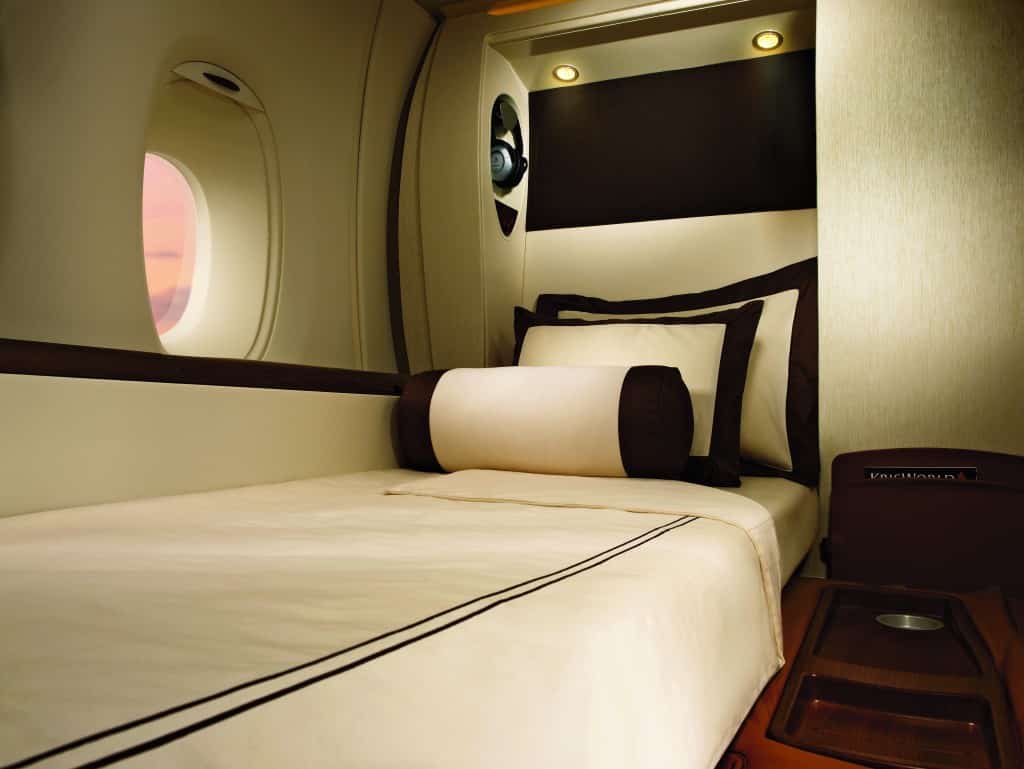
Mileage rates vary, depending on mileage zones within Asia. (15% mileage discount applies if ticket is booked online with Singapore.) Best aspects of this program: Allows upgrades on lowest published fares (often U class), no co-pay, and often very good savings over First Class. Transfer partner: Chase, Amex rewards, Citi ThankYou, or Starwood.
United: C
Upgrades allowed on all Business Class fares, but co-pay and miles charged vary based on booking class. The lowest fares (P and Z) cost 60,000 miles and $1,200. Because United sometimes highly discounts First Class fares, such as Los Angeles-Tokyo and Chicago-Shanghai, the upgrade savings are often not significant. Transfer partner: Chase.
Comparing Biz to First Mileage Upgrades to Asia – on Star Alliance Airlines
[table_opt id="5156" style="double-black-gray-header" width="wide" heading="thcenter" rows="tdcenter" responsive="all"]
This is part ten in FCF’s mileage award comparison series, in which we grade major alliance programs by how much they charge for a free- or upgrade-award ticket from Business to First Class to/from various regions. (See box to the right for a list of recent Report Cards.)
[aside headline="Recent FCF Report Cards" alignment="alignright" width="half" headline_size="default"]
- Rating SkyTeam Business Class Award Pricing Between the U.S. and Asia
- Domestic U.S. Mileage Upgrade Awards on American, Delta, and United when Booking 7 to 30 Days in Advance
- oneworld First Class between the U.S. and Europe
- Star Alliance First Class between the U.S. and Europe
- oneworld First Class between the U.S. and Asia
- Star Alliance Business Class between the U.S. and Asia
- oneworld Business Class between the U.S. and southern South America
- Star Alliance First Class between the U.S. and Asia
- oneworld Business Class between the U.S. and Asia
[/aside]
Mileage upgrades—especially from discounted Business Class fares—are frequently the best way to get to Asia in First Class. That’s because fares on...