
Just by knowing which airlines offer their loophole in their “fare rules”— along with a couple other maneuvers.
[aside headline="The SLS’s Return on Strategy Investment (RSI)" alignment="alignright" width="half" headline_size="default"]
Please pardon the frequent use of the word “free,” though, as it so often carries “the ring of a salesman.” As is often the case, however, here the idea of free is hard to avoid, when you look at the benefits…
SLS Strategy Benefits:
- Getting lower Business Class fares.
- A second destination experience free.
- Earning free bonus award miles.
- Earning free bonus Elite Qualifying Miles (EQMs).
- Writing off a vacation (thus lowering your tax bracket).
[/aside]
This article follows up on last month’s High & Inside piece, which highlighted “how to get more miles from award tickets.” In this installment, we review how to reap tremendous benefits by taking advantage of the minutiae in fare rules— specifically around “stop-over allowances”—in what FCF dubs the SLS.
Specifically, this article will expose five reasons why it’s worth your while to consider the SLS — that is, anytime you want to lower your fare (or even your taxes, possibly).
This strategy will take a little concentration on your part, a little research effort, and some planning. So, you might just skip the piece if you’re not in the mood for that. Or, just look at the embedded charts: They summarize the text, and can help you speed through it.
First: Three Background Tidbits on Stopovers that are at the Heart of this Strategy
- In most cases, a “stopover city” has to be “enroute” to your final destination. Hub-cities often qualify.
- Stopovers are usually not allowed “within the same region” that you depart. For example, none of the major airlines offering First Class in the U.S. and/or Canada (Air Canada, Alaska, American, Delta, United, and US Airways) allow a stop in North America on any published fare, usually.
- For international travel, fare and stopover rules vary widely, even within one airline. Example: United does not allow a stopover on discounted Business Class tickets to Europe, but it does on those tickets to Asia.
The Five Benefits of FCF’s SLS
SLS Benefits #1 & #2: Lower Discounted Business Class Fares-Coupled with a Free Second Destination Experience
The strategy starts out similarly to what the industry traditionally has called “a point beyond fare” or “hidden city fare”. So this first benefit is all about lowering your fare. (I’ll get to the example in a minute.)
With benefit #1, it’s not only about lowering your fare, it also can be about getting more for the same price. With benefit #2, “the more” is a free second destination experience. In this strategy, you really can’t separate the two benefits—call them “coupled.” Let me explain by way of example, #2’s unique benefit of a “free second destination experience,” which also benefits #1’s “lower fare.”
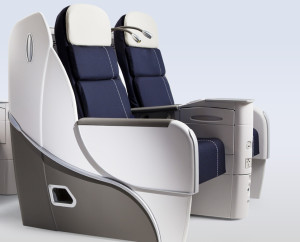
Example SLS Benefits #1 & #2
With SLS International Business Class Fares: Air France is one of the few carriers (others include Air Canada, LOT Polish, TAP Portugal, and Turkish) that allows a free stopover on discounted fares to Europe. So, let’s say your destina-tion is Paris and your travel date is June 15: The fare from New York on Air France is about $5,400 in-cluding taxes. However, Air France offers a much lower New York- Copenhagen fare of about $2,400— for the same travel date, which allows a free stop in Paris (remember the $5,400 ticket?). The savings for your trip to Paris is about $3,000 (55%)—with the added bonus of Copenhagen, for (cheaper than) free, given the cost reduction.
With SLS Domestic First Class Fares: For $100 American Airlines will allow you to stopover in Mexico on many of its Business Class fares, to that country. So, let’s say you’re looking at a New York-Los Angeles round-trip and your travel date is June 15. A Business Class fare on AA’s three cabin service is about $3,500. However, book New York-San Jose Del Cabo, Mexico (for the same travel date) routed through Los Angeles, which the fare permits, and the fare comes to about $1,500—a savings of $2,000 (57%). The “point beyond” (Mexico) is cheaper-than-free, as it lowers your fare.
See chart below for more examples from other U.S. cities.
SLS Benefit #3: You Actually Save Even More Money By Earning More Award Miles
By booking a destination beyond your intended single destination (while obvious when you think about it) you’ll earn more award miles, which can be used for future free tickets and upgrades. Which, if you think about it, carries a value-per-mile, and actually lowers the net cost. Depend-ing on how you look at it, you save money, or get free miles. Take your Perspective Pick.
Example: Let’s look at the LAX-Aruba fare in Benefit #1’s Chart (below) for this one. You’ll earn 5,235 miles for flying First Class LAX-Chicago. Take advantage of the lower fare by including Aruba and you earn 11,155 more award miles (53% more). How can you beat that?
Samples of Lower Fares That Also Give You A Bonus Destination Experience
[table_opt style="gray-header" id="1010 " width="" alignment="center" responsive="all" heading="thcenter" rows="tdcenter"]
SLS Benefit #4: Earn Elite Status Faster
This always has a nice ring to it. By taking advantage of a stopover and traveling to another destination, you will also earn more Elite Qualifying Miles (EQMs), which gets you to elite status faster.
Staying with the same example as in SLS Benefit #3, EQMs earned on Chicago from LAX in First Class come to 5,235. Including Aruba in the itinerary brings the total to 11,155 EQMs, 53% more. Keep this in mind at year-end if you have to do a mileage run—or keep in mind now, so you don’t need to later.
Benefit #5: Writing Off a Pleasure Destination on Your Next Business Trip

What can be better than getting a business trip at 54% off, while getting a free vacation, too? It is a win-win situation.
Let’s take the Boston-Grand Cayman fare on American in the Benefit #1 Chart (on page 3) for this example. Your business trip is Boston-Miami and a First Class fare is about $2,125 includ-ing taxes; but American offers a much lower Business Class fare for about $970 from New York to Grand Cayman on the same date that allows a stop in Miami, a savings of about $1,155 (54%). You can put it toward the hotel stay in Aruba, where the Ritz Carlton, Grand Cayman costs about $350 per night. So why not unwind after a business trip for three days in the Caymans, especially when it is all paid for.
Just by knowing which airlines offer their loophole in their “fare rules”— along with a couple other maneuvers.
[aside headline="The SLS’s Return on Strategy Investment (RSI)" alignment="alignright" width="half" headline_size="default"]
Please pardon the frequent use of the word “free,” though, as it so often carries “the ring of a salesman.” As is often the case, however, here the idea of free is hard to avoid, when you look at the benefits…
SLS Strategy Benefits:
- Getting lower Business Class fares.
- A second destination experience free.
- Earning free bonus award miles.
- Earning free bonus Elite Qualifying Miles (EQMs).
- Writing off a vacation (thus lowering your tax bracket).
[/aside]
This article follows up on last month’s High & Inside piece, which highlighted “how to get more miles from award tickets.” In this installment, we review how to reap tremendous benefits by taking advantage of the minutiae in fare rules— specifically around “stop-over allowances”—in what FCF dubs the SLS.
Specifically, this article will expose five reasons why it’s worth your while to consider the SLS — that is, anytime you want to lower your fare (or even your taxes, possibly).
This strategy will take a little concentration on your part, a little research effort, and some planning. So, you might just skip the piece if you’re...