
A look at both simple and advanced strategic approaches for bookings paid in cash, not in miles
I just had a conversation with a subscriber who is planning a trip to London from San Francisco next June—let’s call him “John” going forward. Unlike many travelers today, he has the luxury of time to plan, and he’s the type of person who likes to nail down the details far in advance.
[aside headline="Reservation 'Hold' Option" alignment="alignright" width="half" headline_size="default"]We all Know someone who is not content unless a planned trip is all booked meaning printed flight numbers,times,and travel dates. If you're this traveler,then consider using American Express International Airline Program (IAP),a two for one deal. Ticker prices are often high, but you don't have to pay up until 30 days before departure, and you can back out al together for $100 or less...[/aside]
The big question is whether this is a blessing or a curse. Because some-times booking way in advance for peace of mind—most major airlines will let you book tickets 11 months out—means giving up a piece of your wallet.
Here’s how John’s itinerary stands right now: $5,200 round-trip Business Class on Virgin Atlantic or $3,700 for a Business Class seat on the outbound and a Premium Economy seat on the return, something he was considering to lower the outlay. He is also toying with the idea of locking in a Business Class fare via Amex’s 2-for-1.
[aside headline="When Premium Fares Are Lowest" alignment="alignright" width="half" headline_size="default"]The cheapest time to travel to Europe in Premium Class is during Thanksgiving, when fares start at $1,700 (inclusive) in Business Class. Next best is Christmas, when Business Class fares start at $2,300. (See FCF August issue for more.)[/aside]
Timing it Right to Get the Lowest Premium Fare: The Basics
Business Class
Based on FCF’s analysis over the last 16 years focused entirely on premium air travel trends, I recommend waiting until January to book Europe for summer 2013.
There is a very high probability that one or two airlines will come out with summer fare promotions, which are usually around 64% lower than normal advance-purchase discount fares. Within a few weeks most of the industry follows suit (with the exception of British Airways, which usually plays hard-to-get, but often will match at a later date, like February).
So, if you’re looking to book summer 2013 Business Class, wait until the fares drop in January or February.
Why do airlines price this way? They know that many travelers will get anxious, perhaps because they have a cruise, land rental, or other concrete date for being somewhere, and will bite early, so the airlines figure, “Why discount for those willing to pay normal price.”
Don’t be one of those who fall into that full-price trap.
First Class
Same rule applies here. The only difference is that you have to be quick on the draw when the fares drop, because fewer airlines discount First Class and the booking window is usually short. Between February and April, over the last few years, United has started a First Class fare war for summer travel, offering up to 69% off on published First Class fares. Air France, American, Lufthansa, and SWISS are among the carriers that have joined the fare-slash soirée, though not on all routes. FCF will monitor the opportunities and analyze them for you as they come up.
Still Can’t Wait?
For some people it’s worth paying more to have a trip nailed down. But even so, there are two things you can do to minimize your outlay when it comes to booking travel to Europe: Pay a hedge fee or book a low-fare airport.
Hedge Fee Strategy
As on Wall Street, “hedging” is money you put down to in-sure yourself against a price change. Here it means buying the lowest discounted Business Class ticket now. Your hedge is the cancellation fee option you may have to pay—otherwise a “get out of jail” card, which some airlines permit—if you find a lower fare at a later date.

Staying with John’s San Francisco-London scenario, let’s say he decides to buy the round-trip Business Class ticket on Virgin Atlantic for $5,200 now. The cancellation fee is $500. Let’s also say that in January another airline comes out with a predicted round-trip Business Class fare of $3,400, which Virgin Atlantic does not match. That’s a fare difference of $1,800. Paying the cancellation fee still leaves John $1,300 in the black. In other words, peace-of-mind (to secure something now) costs John $500 if he books withVirgin Atlantic, which permits a refund, minus the cancellation fee.
I Know What You’re Going to Ask Next
The key bit of knowledge is knowing which airlines allow refunds. Because the last thing you want is a non-refundable travel voucher for the amount of the unused ticket and having to pay a change fee each time you use it.
You want your money back, rather than being locked into the carrier with a voucher valid only with them, which usually must be used within a year from the ticket-issue date. See the chart below for cancellation and change rules for discounted Business Class fares on many major airlines to Europe—and notice how poorly SkyTeam and most Star Alliance carriers come out in this regard.
Cancellation and Change Rules on Discounted Business Class Fares to Europe
[table_opt style="gray-header" id="2329 " width="" alignment="center" responsive="all" heading="thcenter" rows="tdcenter"]
Oftentimes, the higher the fare price, the more lax the fare rules are. This is the case with First Class fares to Europe, where fares can easily be over $10,000, and are often refundable for a fee. Please see chart to the right for details.
Cancellation and Change Rules on First Class Fares to Europe
[table_opt style="gray-header" id="2330 " width="" alignment="center" responsive="all" heading="thcenter" rows="tdcenter"]
Low-Fare Routes: Business Class to Europe From 14 Major U.S. Cities
[table_opt style="gray-header" id="2331 " width="" alignment="center" responsive="all" heading="thcenter" rows="tdcenter"]
Another Hedging Alternative: Low-fare Airports
The most desirable destinations are usually “high-fare cities.” Where there’s demand, the price goes up. The way around this is to arrive by the side-door—meaning flying to a second-tier airport to get a low fare and then taking a connecting flight (or going by car, or train, or a separate ticket—this can also be a free side trip, if you play it right, and be used to lower the overall cost, which could finance your side trip) to your destination.
The trick is to find the least costly routing to Europe from your U.S. departure city—or another U.S. departure city and connect there. Yes, this option can take more time, but it’s one of the best ways to save money; plus there are the possibilities of the free side trip. Low-fare routes can save you thousands of dollars, as the chart below shows.
The low-fare airport strategy can even give you a second destination for free if you know how to take ad-vantage of stopover rules. (See the FCF May issue for more on this.)
So let’s go back to John’s San Francisco-London scenario on Virgin Atlantic. As the chart (page 4) indicates, Virgin Atlantic’s low-fare airports are Barcelona or Madrid at $3,500 (inclusive). Virgin Atlantic is also one of the very few airlines that allows a free stopover on discounted Business Class fares (more on this coming soon). On this itinerary, that means a free stop in London, which is the destination anyway. So John can get a free stop in Spain and lower the fare from $5,300 (San Francisco-London Business Class) to $3,500. How much fun could you have in Spain with a $1,800 expense windfall?
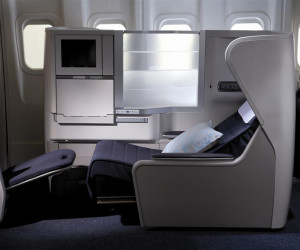
Advanced Strategy: The First Class Hedge
Consider booking Business Class with a carrier that will allow you to re-book to First Class if an extraordinary summer promo fare is offered, like last year.
Using John’s San FranciscoLondon scenario, this might amount to booking on United because Virgin Atlantic does not have a First Class cabin, and because United has offered special summer First Class fares over the last few years, while other carriers have not.
If John buys a Business Class ticket now on United ($4,800), and on April 1, United rolls out a First Class fare of $5,500 (as it did last year), it would be smart to pay the $400 change fee plus the fare difference ($700) because United allows the value of an unused ticket to be applied towards the purchase of a new one (as long as you’ve paid the change fee and fare difference). Remember: First Class is as different from Business as Business is from economy, generically speaking, in my opinion.
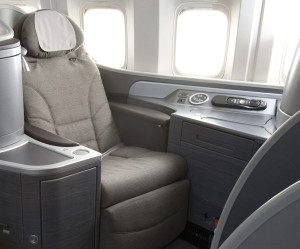
The Travel Voucher
The airlines turn unused, non-refundable tickets into travel vouchers (but only if you ask prior to departure). The voucher, usually valid for a year from the ticket-issue date, is good for travel on that airline to any destination, although a chunk of it will be eaten up in change fees.
In Summary
Wait if you can. If you can’t, book a ticket on an airline that will let you cancel and get a refund before departure or buy a ticket to a lowcost airport and change that ticket at a later date if a better deal is offered to your preferred destination, or a great First Class fare becomes available.
A look at both simple and advanced strategic approaches for bookings paid in cash, not in miles
I just had a conversation with a subscriber who is planning a trip to London from San Francisco next June—let’s call him “John” going forward. Unlike many travelers today, he has the luxury of time to plan, and he’s the type of person who likes to nail down the details far in advance.
[aside headline="Reservation 'Hold' Option" alignment="alignright" width="half" headline_size="default"]We all Know someone who is not content unless a planned trip is all booked meaning printed flight numbers,times,and travel dates. If you're this traveler,then consider using American Express International Airline Program (IAP),a two for one deal. Ticker prices are often high, but you don't have to pay up until 30 days before departure, and you can back out al together for $100 or less...[/aside]
The big question is whether this is a blessing or a curse. Because some-times booking way in advance for peace of mind—most major airlines will let you book tickets 11 months out—means giving up a piece of your wallet.
Here’s how John’s itinerary stands right now: $5,200 round-trip Business Class on Virgin Atlantic or $3,700 for a Business Class seat on...