
We’ve bestowed a lot of names on extraordinarily low premium fares over the last 27 years at FCF: Flash , Mayfly, EasyUp, Anomaly, and more. Our names intended to capture the essence of the fares, but that changes so much with the times that we’ve decided to adopt the industry’s technical term: Tactical Fares.
A rose by any other name would smell as sweet—as long as you’re in the position to sniff it out.
Every Seat Has a Deadline
An airline seat has a strict use-by date. A departing flight with an empty seat is a missed revenue opportunity for the airline.
So, do airline execs sit back with fingers crossed hoping that UA 20 from Houston to Amsterdam will be full of customers?
No, they get tactical. They want the seats filled, so they reduce the price accordingly. But they do it very discreetly. And that’s when the opportunity arises for those with the awareness and mindset ready to take advantage of it.
Now, just to be clear, we’re not talking about economy fares that nudge up and down by $50 to $100 at a time. We’re talking about discounts of hundreds and thousands of dollars on Business and First Class flights on major airlines.
If you’ve read this far and are still interested, you’re already being Upgrade Mindful, a crucial marker of having The Upgrade Mindset.
Upgrade Mindfulness
To be mindful is to be aware and in the moment. To be Upgrade Mindful is to be aware that for airlines, filling seats is an incredibly complex and dynamic process, which often results in premium fares that are little more than economy fares.
Most people realize that an airplane seat has many different prices, if only because they change nearly every time they’re checked, and some industry estimates say there are up to one million fare changes lodged with ATPCO, the largest fare aggregator, daily. When you know this is going on—and that really low fares exist that are not widely advertised—you’re in a position to take advantage of the opportunities.
Too Much on Their Hands
The sheer complexity of running an airline may just get you from A to B in comfort without paying too much.
What airlines are concerned about: Competition. Price matching. Route efficiency. Elite poaching. Business versus vacation travel. Profit. Shareholders. Regulations. Seasons. Seat quality. Aircraft availability. Aircraft maintenance. The weather. Surcharges. Safety. Child discounts. Penalties. Alliances. Direct versus multiple connections.
Within all that airline-side complexity lies opportunity. (It’s hard to juggle 20 balls without dropping a couple.)
The Sale Nobody Knew About
Why would an airline have a seat sale and not announce it publicly? Because most folks in premium class (meaning they paid a premium) would be angry if they knew the person next to them was traveling for $2,000 less. “Why didn’t they offer that to me?! I’m loyal!”
We’re living in a time when airline computers can get more and more granular about seat demand on a given flight. As a result, the carriers can get more and more creative with Tactical Fares.
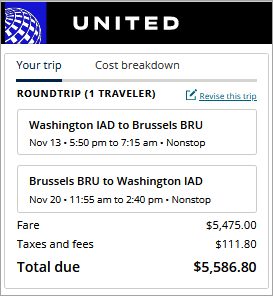
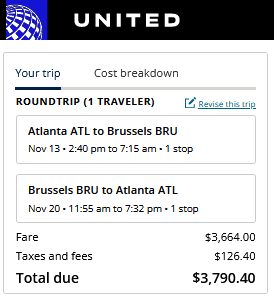
Take Washington, DC to Brussels. United’s computers forecast some empty seats in Business Class, so they offer Atlantans going to Brussels (who are willing to fly via Washington, DC) a spectacular deal to fill those seats at the moment. The Washingtonians on that same flight are none the wiser for paying almost double.
Washington, DC-Brussels Business Class fare $5,586
Atlanta-Brussels Business Class fare $3,790
Awareness of Tactical Fares Is a Game Changer
If I had a nickel for every time I heard someone say or write, “On X day of the week” or “Y time of day is the best time to buy an airline ticket,” I’d have enough to fly Emirates First Class, full freight. My answer to the “best time to buy” is simply when fares are extraordinarily low. (IOW: Not just a little less!) Sound trite?
Let me put it this way: If you don’t have a sense of context or upgrade mindfulness, you might use your miles when it’s ill advised to do so. It might be because a great low cash fare is available instead, or because you might choose a cruise that’s on the edge of the high or shoulder season, or lots of other reasons. Are you passive when it comes to fares or active? Perhaps it’s time to consider what airlines are offering, and not just what you initially want. This is the Upgrade Mindset at work: Flying when the airlines want you to.
Tactical Fares, Some Mug Shots
Here are a range of Tactical Fares with links to previous examples. One reason for this special report is the hope that heightened awareness will lead you to look out for these fares. And to put our cards on the table; it goes straight to why First Class Flyer exists: through research, analysis, and second-to-none experience, we’re in a unique position to help you know when and where these tactical fares are occurring.
Holiday Tactical Fares:
Christmas, Easter, Thanksgiving, and New Year’s are all examples of holiday Tactical Fare discounting. It’s a time when many business travelers stay at home so airlines have many unsold premium seats. In the post lockdown era these have been less prevalent.
Departure-Specific Tactical Fares:
American charges $3,523 for Business Class return from New York to London. United charges $2,773. The difference, apart from the price? The United flight leaves from Newark, while the American flight leaves from JFK. So, the upgrade-mindful are aware of how an airport location can yield big savings. They don’t pull the shutters down when JFK isn’t on the table. If a cheaper fare appears from Hartford, they might spend $120 on a limo to Hartford in order to save $750+ on the fare.
Destination-Specific Tactical Fares:
While London and Paris might be on sale because of excess capacity, often Barcelona, Bucharest, Budapest, Copenhagen, Geneva, Oslo, and Sofia are examples of softer markets, and all of them are prone to market-specific Tactical Fares. The airlines look for ways to bolster sales to those destinations—when they need to. The upgrade mindless person says: “I don’t want to go to Copenhagen, I want to go to Paris.” And so the lights go out on the opportunity. The Upgrade Mindful, on the other hand, knows that most European cities are relatively close to each other. Flights within Europe are cheap, and at times, even free when you fly within airline alliances. For example: Chicago-Geneva goes for $2,577 round-trip, compared to London $4,115, a savings of $1,582 (38%).
To Asia, this year on Delta, a non-stop round-trip fare from Los Angeles to Tokyo was discounted from $7,952 to $2,662, a 67% savings. For example, Cathay Pacific offered Los Angeles to Manila for $3,577 and to Singapore for $3,672; the fare on Delta and United is $5,448+, a savings of $1,776 (32%).
Advance-Purchase Tactical Fares:
These, for some reason, buck convention when it comes to advance-purchase requirements. New York-London non-stop in Business Class on American, for example, goes for $3,273, whereas NYC-Paris is $5,542 on short notice.
To me, it’s simple: Knowledge is power.
Related REPORTS
How to Leverage FCF’s Special Fare Finder
Are You An Opportunity Traveler?
Seeing Rollercoaster Fares? Have FCF’s 2-Step Plan in Your Pocket
The Upgrade Mindset & Contentment, Part I: How Considering the Three Cs Can Deliver
Stop “Booking Backwards”: Use FCF’s Forward-Thinking Deals to Book Dream Trips Every Time
We’ve bestowed a lot of names on extraordinarily low premium fares over the last 27 years at FCF: Flash , Mayfly, EasyUp, Anomaly, and more. Our names intended to capture the essence of the fares, but that changes so much with the times that we’ve decided to adopt the industry’s technical term: Tactical Fares.
A rose by any other name would smell as sweet—as long as you’re in the position to sniff it out.
Every Seat Has a Deadline
An airline seat has a strict use-by date. A departing flight with an empty seat is a missed revenue opportunity for the airline.
So, do airline execs sit back with fingers crossed hoping that UA 20 from Houston to Amsterdam will be full of customers?
No, they get tactical. They want the seats filled, so they reduce the price accordingly. But they do it very discreetly. And that’s when the opportunity arises for those with the awareness and mindset ready to take advantage of it.
Now, just to be clear, we’re not talking about economy fares that nudge up and down by $50 to $100 at a time. We’re talking about discounts of...